July 27–August 3, 2026
Open Workshops at the Ligovskaya Library, St. Petersburg, Russia
Curator: Liza Kisten
Open Workshops at the Ligovskaya Library, St. Petersburg, Russia
Curator: Liza Kisten
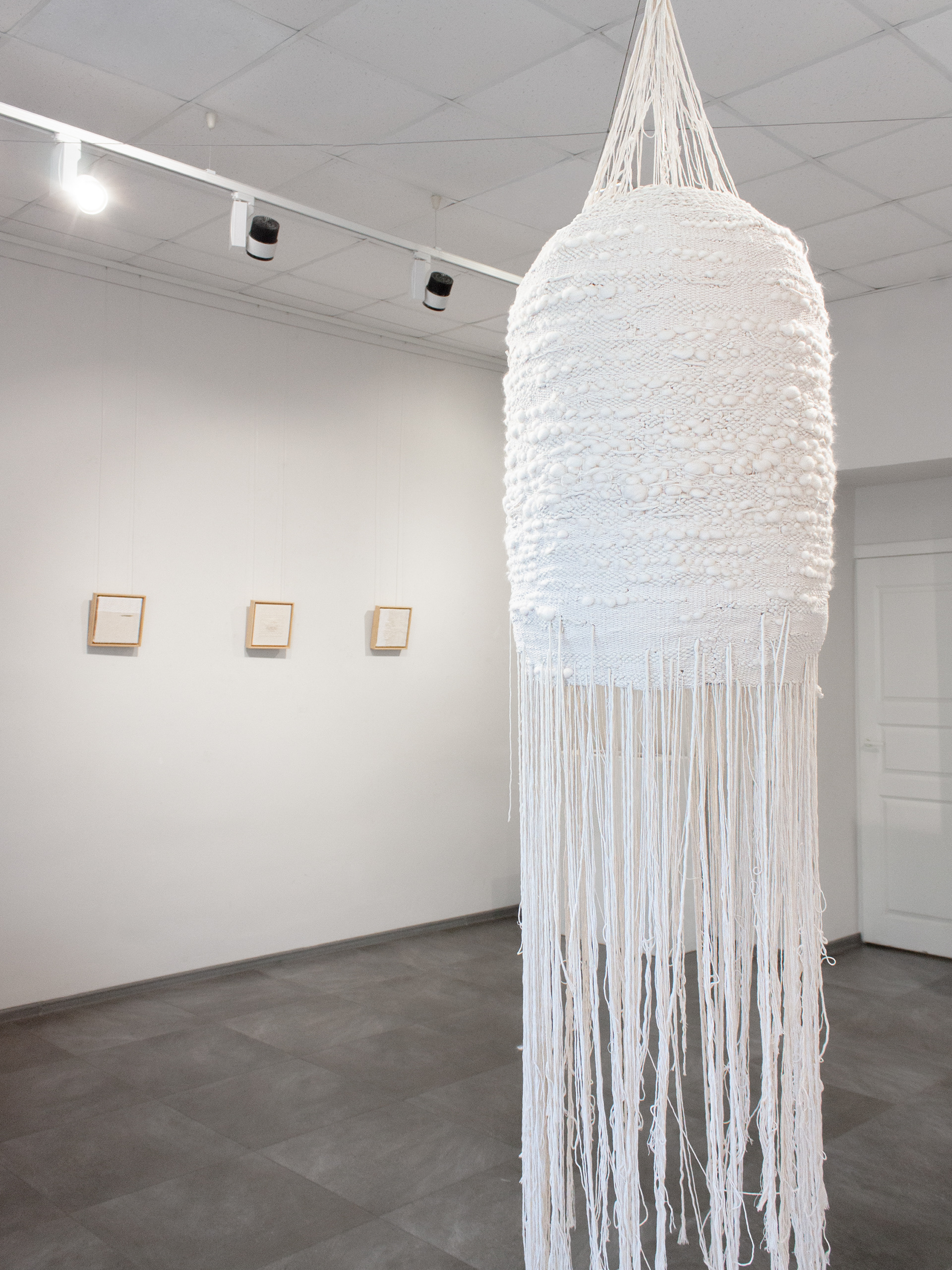
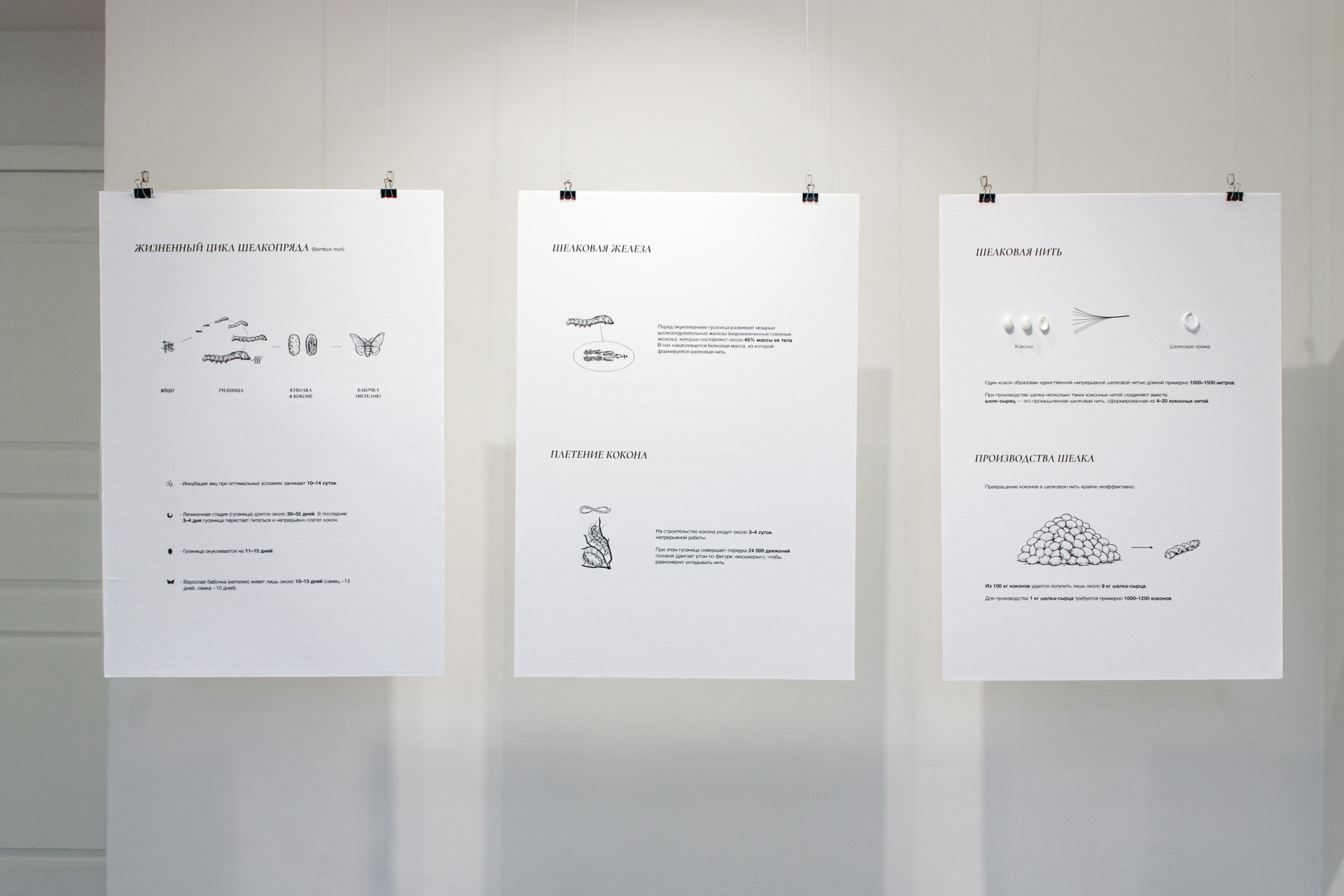
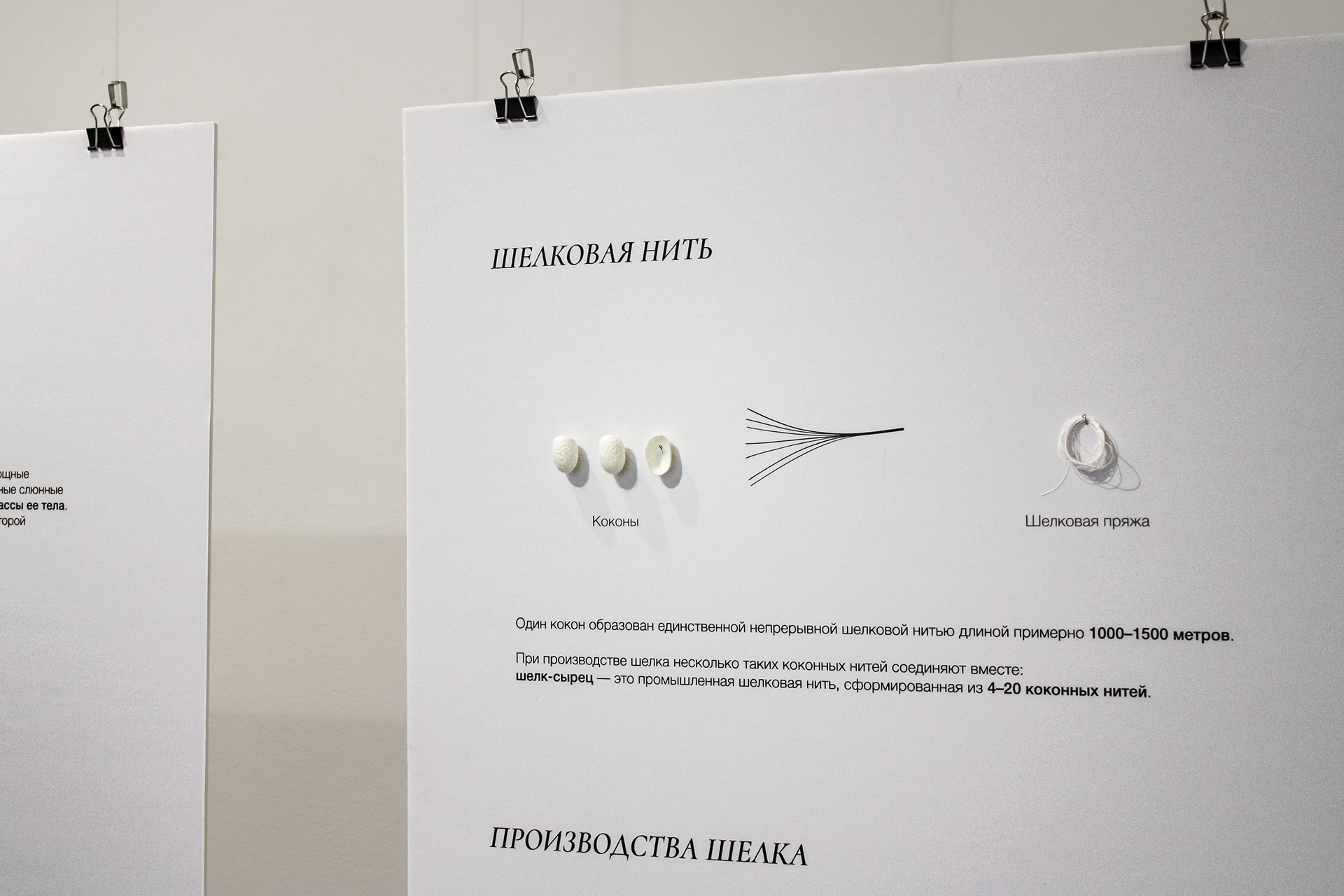
The silkworm literally invests time and its own body in the making of the cocoon: its larval stage lasts about 30 days, while the continuous process of spinning the cocoon takes roughly three days—one tenth of its life. Its silk glands account for nearly half of its body mass, and a single filament can reach up to a kilometer in length. In a similar way, an artist invests hours, as well as physical, emotional, and material resources, in a working process shaped by research and transformation, while the viewer most often encounters only the final result.
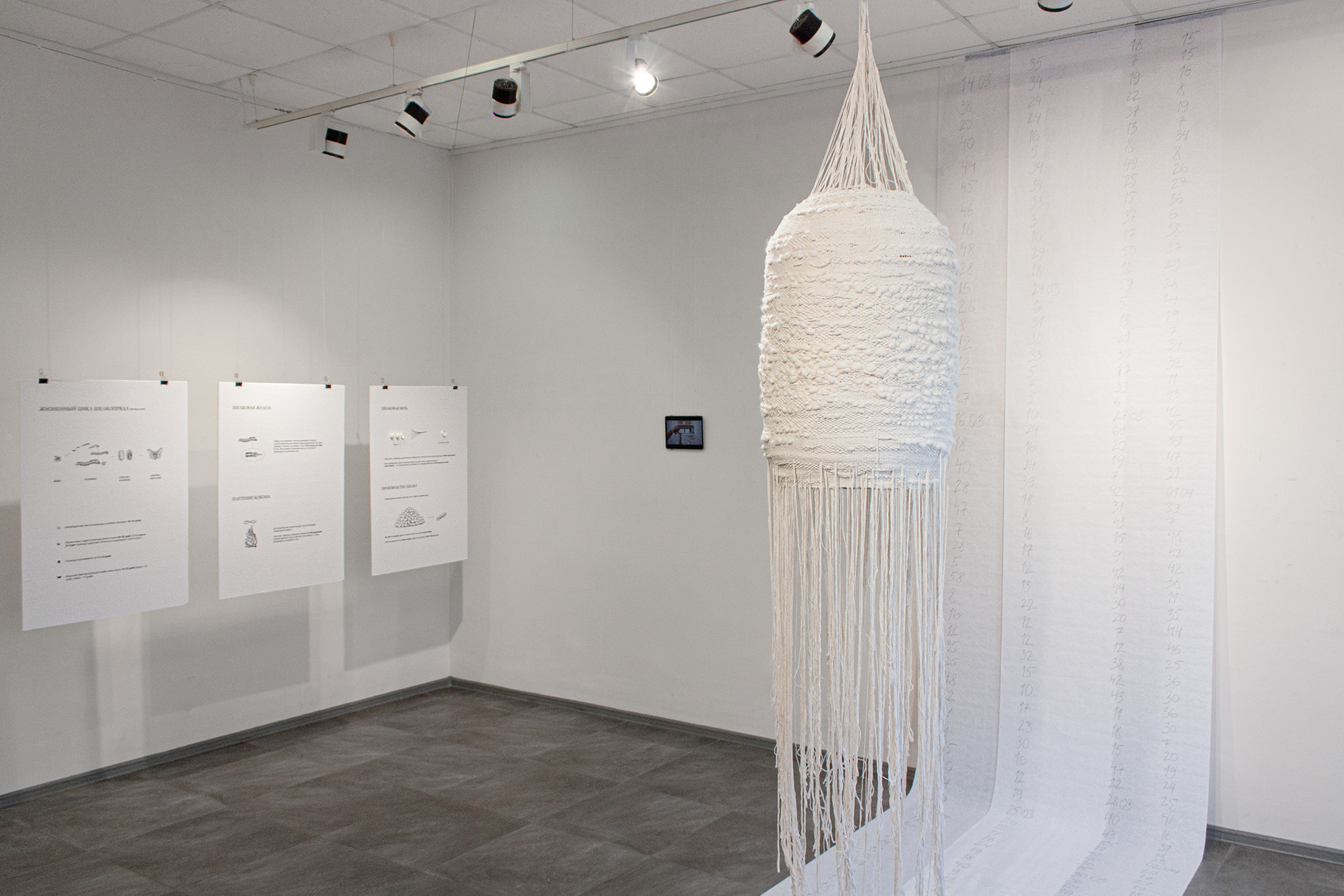
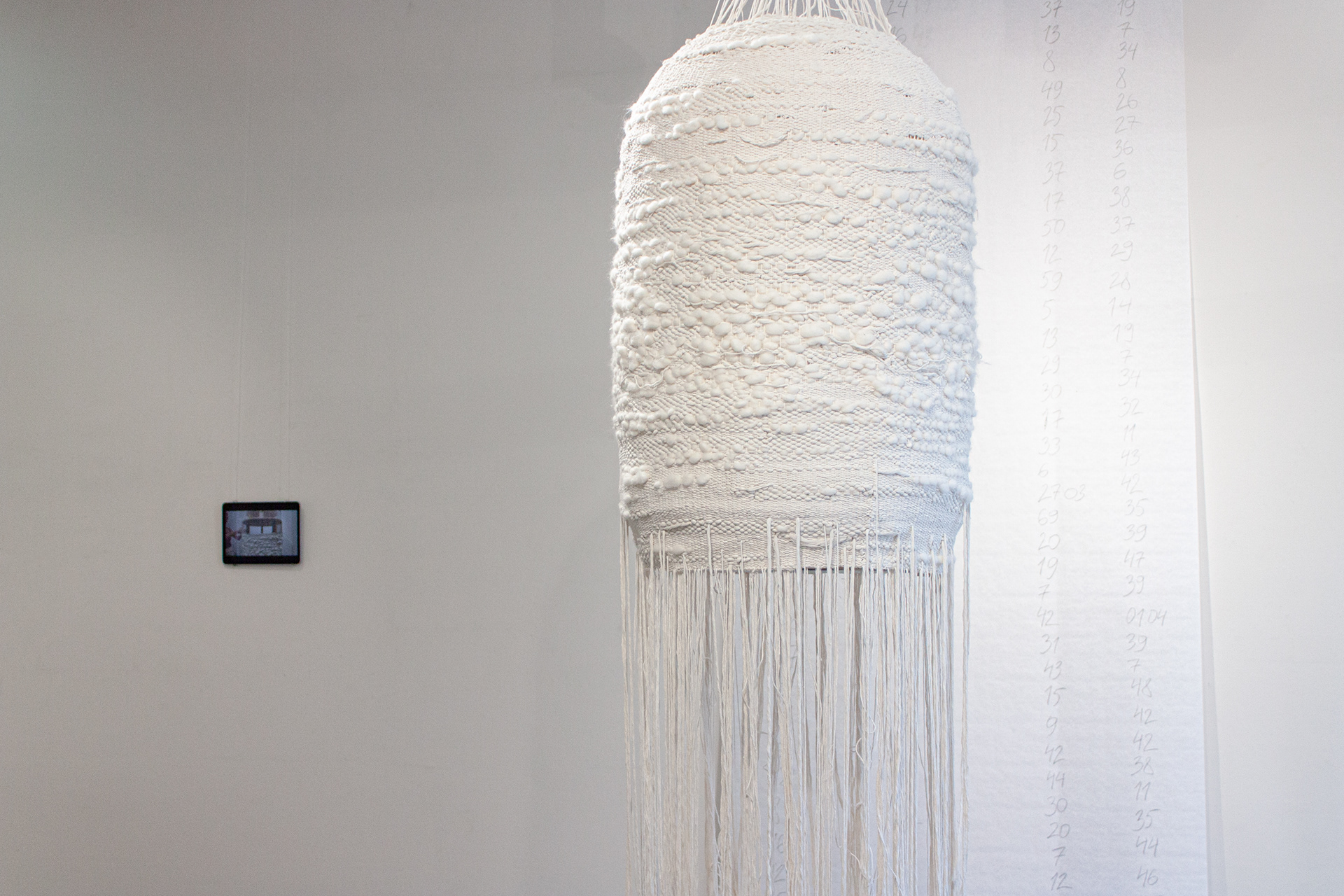
The cocoon becomes a symbol of this almost invisible labor. Its enlarged scale in the central installation, Becoming Silk, allows the viewer to relate its form to their own body and to sense the magnitude of the effort contained within it. The rhythmic repetition of weaving gestures echoes the movements of the silkworm as it forms its cocoon.
Within today’s accelerated media environment, the intensity and duration of artistic labor can seem almost absurd. Yet just as silk cannot be fully replaced by synthetic materials, thoughtful craftsmanship and the artistic process cannot be substituted by accelerated technological formats.
The exhibition is structured around a parallel between the labor of the silkworm and that of the artist, gradually shifting the viewer from a rational understanding of the subject toward a more immediate experience of the artistic process.
The first section presents facts about the silkworm that reveal the scale of its largely invisible labor. At the center of the exhibition, the cocoon becomes a symbol of this process. Enlarged to human scale, it allows viewers to relate its form to their own bodies and to physically perceive the amount of effort embodied within it.
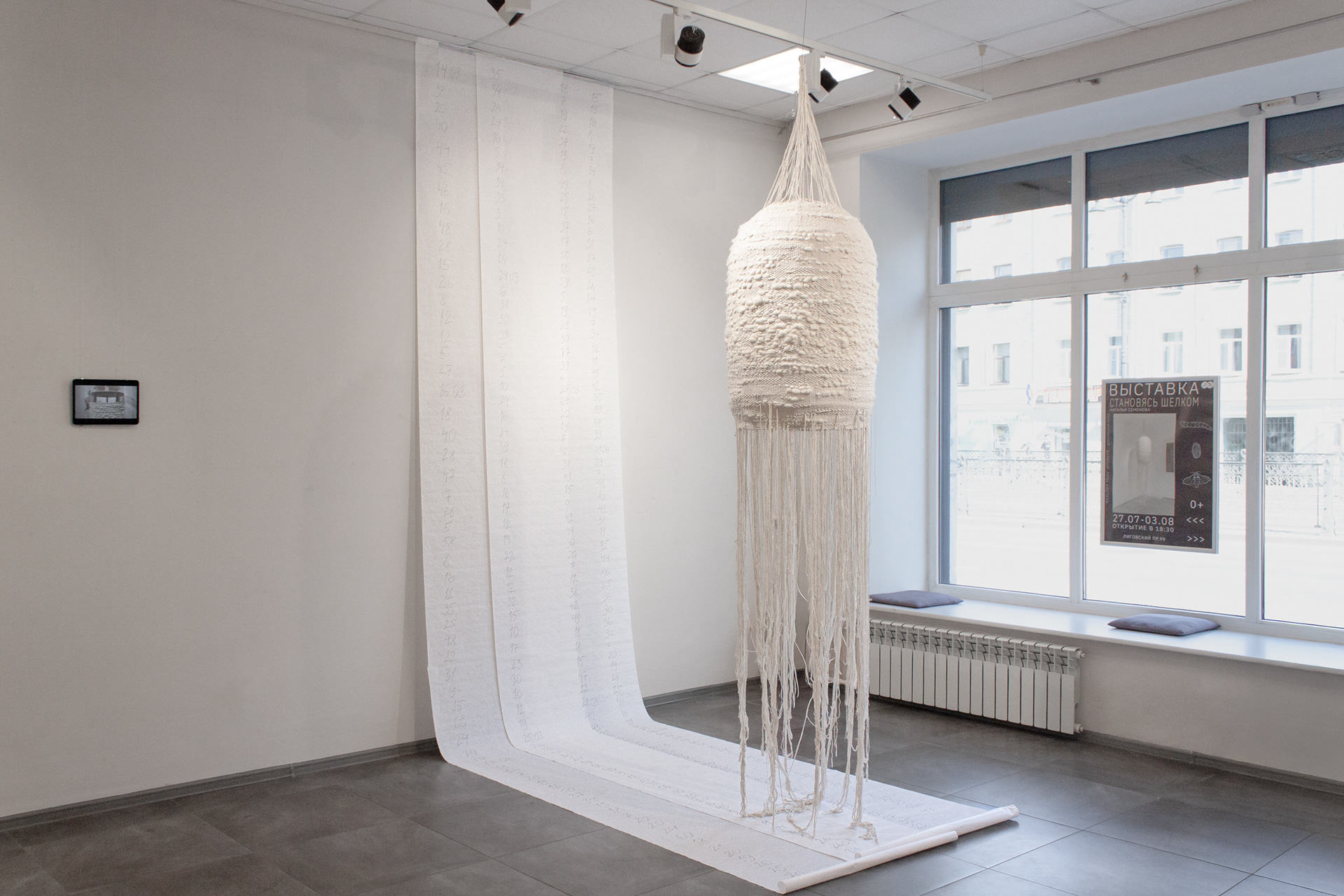
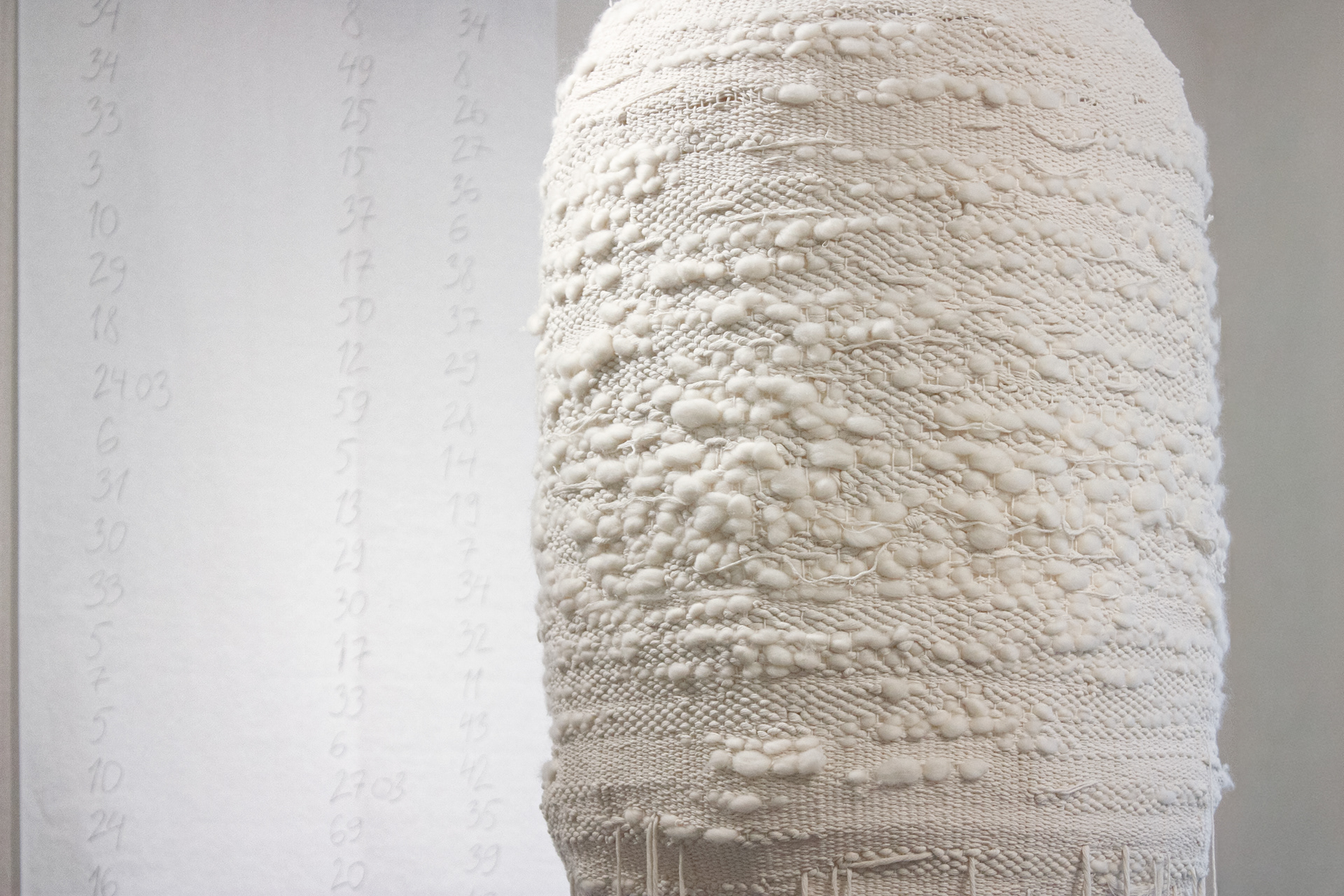
Nearby, data indicates the number of movements involved in its creation, while a video work presents the repetitive rhythm of weaving, echoing the movements of a silkworm spinning its cocoon.
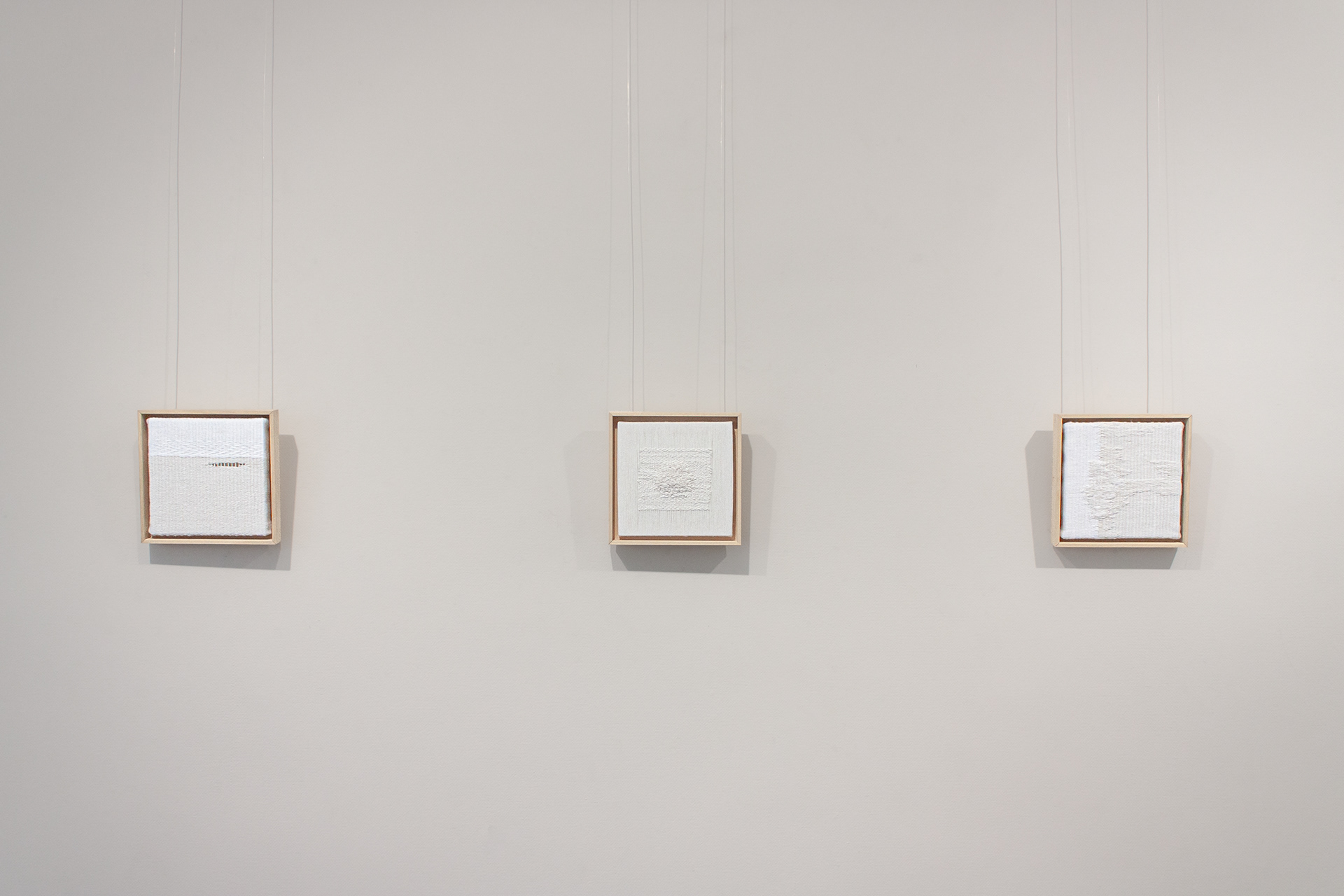
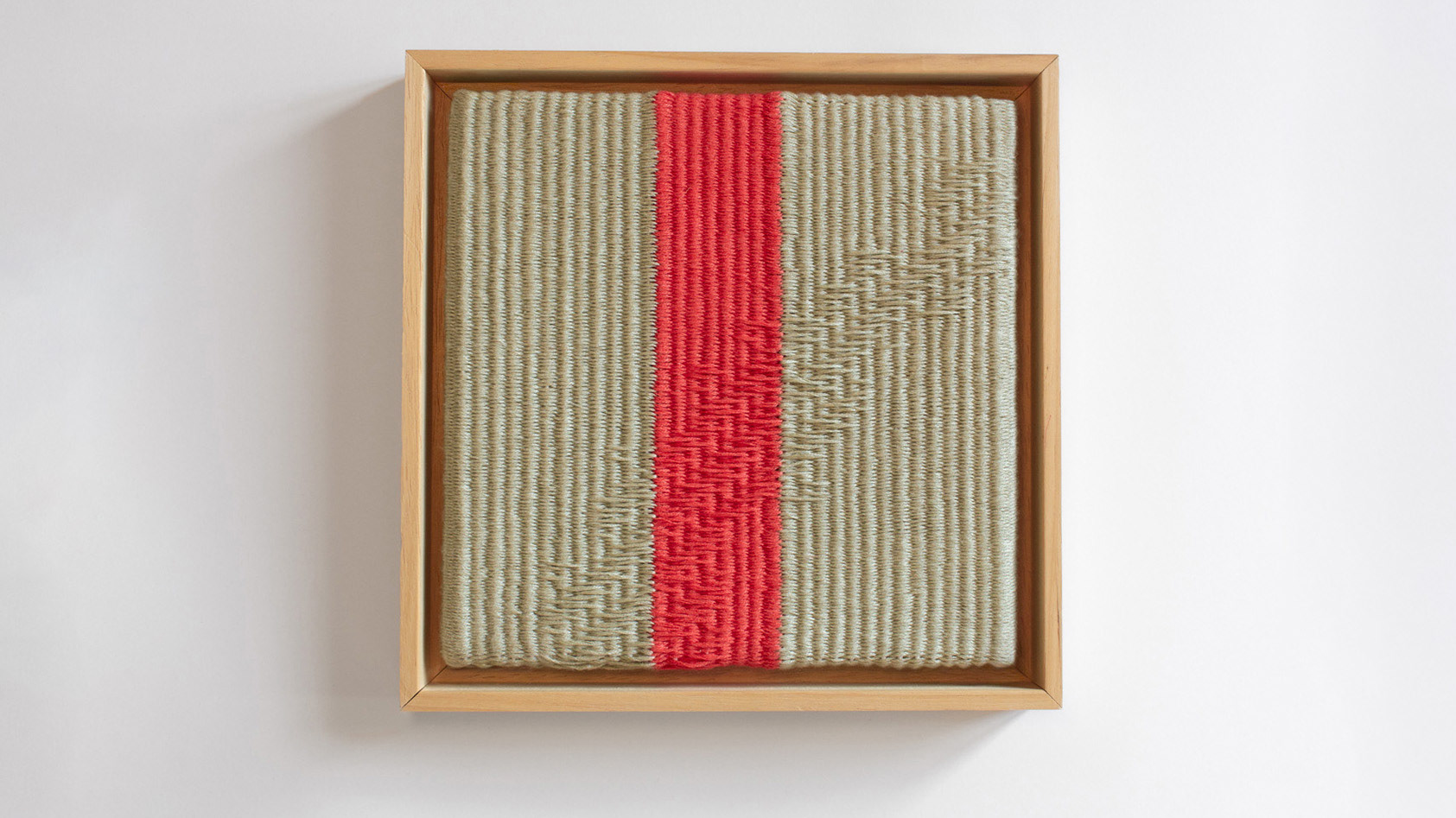
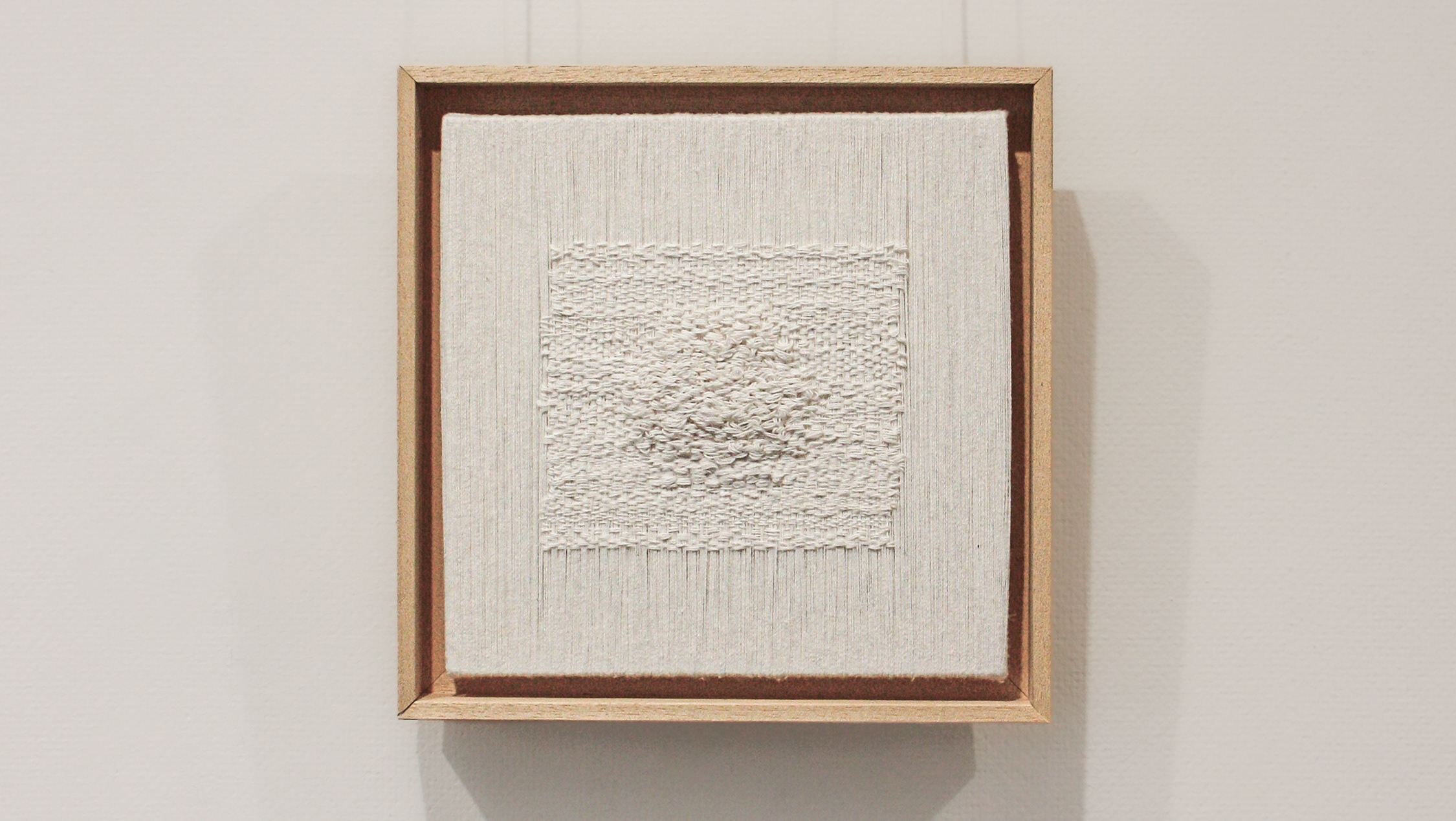
The final section presents textile works as the outcome of this extended process—the transformation of labor into an artistic object.